Morgan Walter · 28 September 2026
Tracing the Supply Chain Dynamics of High-Performance Copper Materials in Contemporary Construction
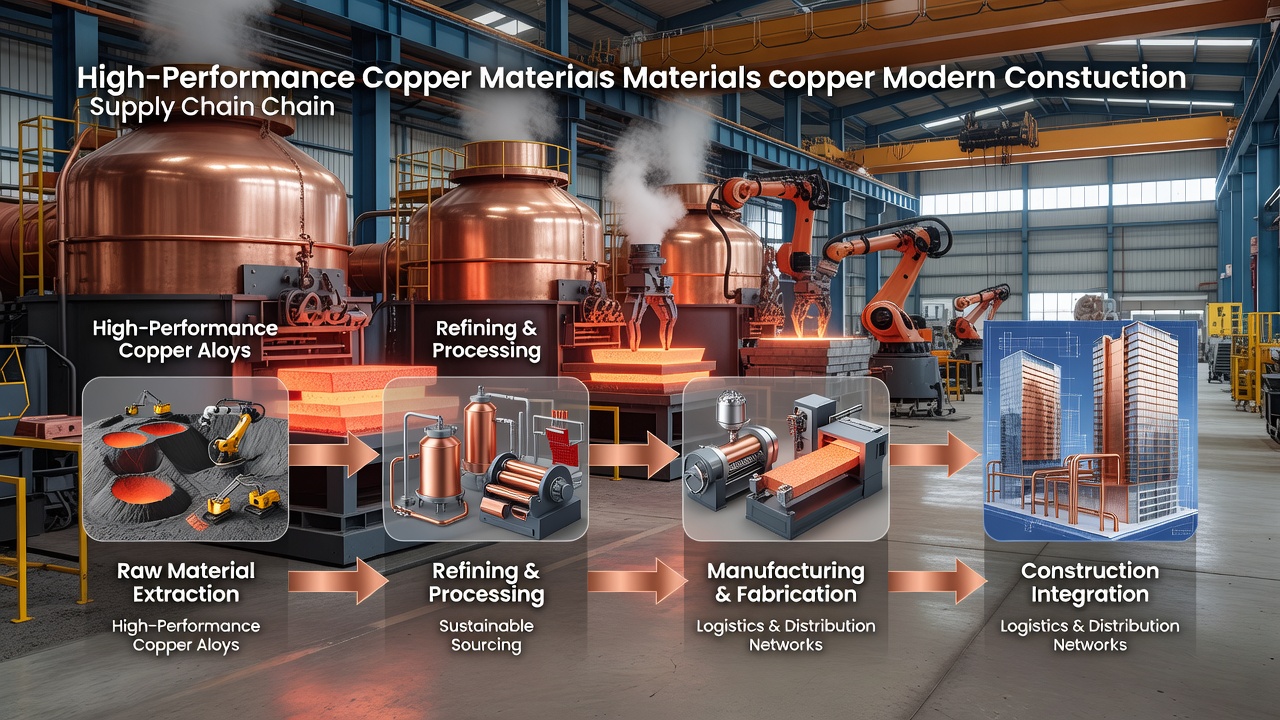
High-performance copper materials reach construction projects through intricate global networks that begin deep underground and end in finished structures, and observers note how these pathways shift with market conditions, regulatory changes, and technological advances. Mining operations in major producing regions extract ore that contains varying copper concentrations, while subsequent stages refine the material into forms suited for electrical systems, plumbing networks, and structural reinforcements where conductivity and durability matter most.
Origins in Global Mining Operations
Primary extraction sites operate across South America, North America, and parts of Africa and Asia, and data from geological surveys show Chile and Peru together account for a substantial share of annual output while the United States and Australia contribute significant volumes from large-scale open-pit and underground mines. Companies transport raw ore to nearby concentrators where crushing and flotation processes separate copper-bearing minerals, after which smelters convert concentrates into blister copper that refineries further purify to meet construction-grade specifications.
Those who track commodity flows point out that high-performance variants often require additional alloying steps with elements such as chromium or zirconium to enhance strength and thermal resistance, and these modifications occur at specialized facilities before the materials enter distribution channels. In September 2026 reports indicated steady output increases from several Chilean operations despite periodic labor negotiations that can affect shipment schedules.
Processing and Refinement Stages
Refineries apply electrolytic methods to achieve purity levels above 99.9 percent, and manufacturers then shape the refined copper into rods, sheets, tubes, and wires that contractors specify for demanding applications. Quality control laboratories test each batch for electrical conductivity, tensile strength, and corrosion resistance, while certification bodies verify compliance with standards set by organizations in multiple jurisdictions.
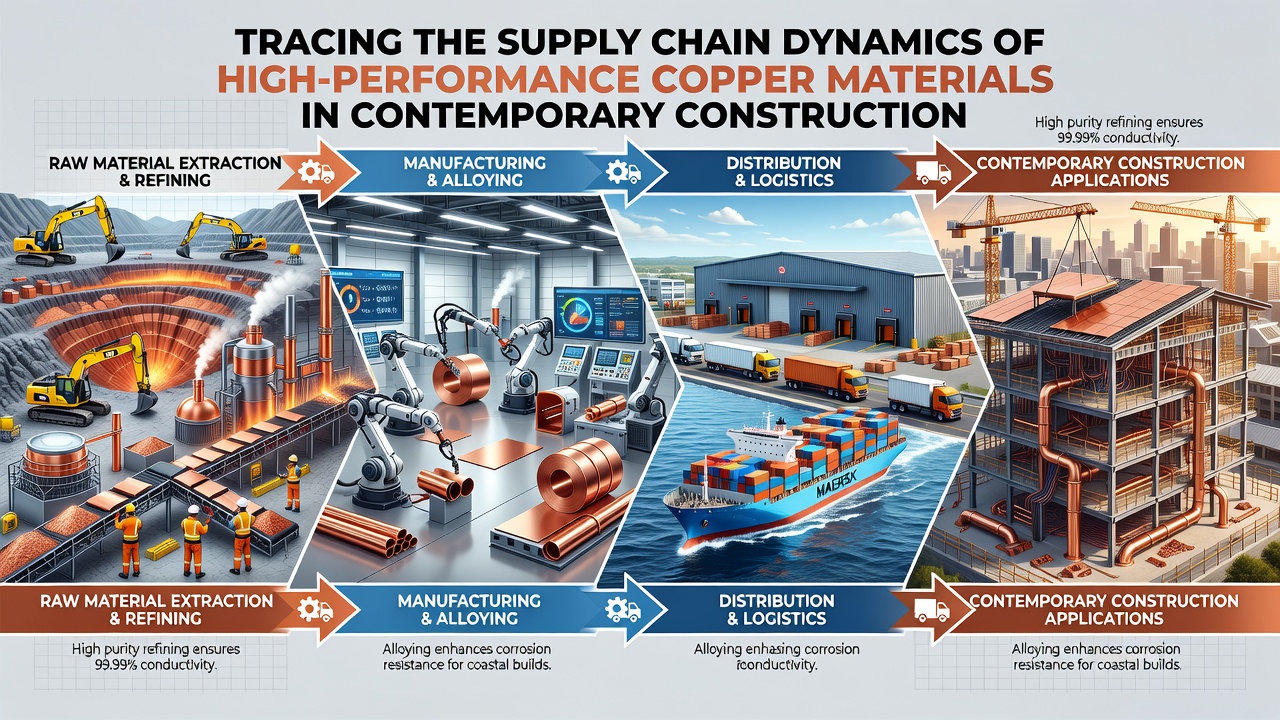
Turns out the addition of trace elements during these stages creates alloys capable of withstanding higher temperatures and mechanical stress, which proves essential in high-rise electrical risers and industrial piping systems. Researchers at institutions across Europe and North America have documented how such enhancements extend service life in corrosive environments, and figures from industry associations reveal growing demand for these specialized grades in both new builds and retrofits.
Logistics and Distribution Networks
Once refined and alloyed, copper products move through layered transportation systems that include rail, maritime shipping, and regional trucking, and port statistics demonstrate that major export terminals in Peru and Australia handle thousands of metric tons monthly destined for construction markets in Asia, Europe, and North America. Warehouses and distributors maintain inventories calibrated to project timelines, while just-in-time delivery models reduce storage costs yet require precise coordination among suppliers and contractors.
Supply disruptions from weather events, geopolitical tensions, or equipment failures can ripple through these networks, and analysts at government agencies such as Natural Resources Canada track inventory levels to anticipate shortages. One study released by Geoscience Australia highlighted how improved tracking technologies allow better forecasting of delivery windows for high-performance grades used in sustainable building projects.
Integration into Modern Construction Practices
Architects and engineers specify high-performance copper for its combination of electrical efficiency, antimicrobial properties, and recyclability, and on-site teams install these materials in grounding systems, HVAC components, and facade elements where long-term performance justifies the selection. Fabrication shops cut and bend tubes and sheets to custom dimensions before delivery, and welders or mechanical connectors join sections according to detailed blueprints that account for thermal expansion and seismic activity.
Evidence from construction databases shows increased use in data centers and healthcare facilities where reliability under continuous load remains critical, and international trade statistics compiled by the International Copper Study Group illustrate how regional preferences influence the mix of standard versus alloyed products arriving at job sites.
Challenges and Sustainability Considerations
Environmental regulations in producing countries now require mine operators to manage water usage and tailings disposal more stringently, and compliance costs influence overall supply economics while encouraging adoption of recycled copper inputs that can constitute up to 30 percent of certain product lines. Life-cycle assessments conducted by university research teams demonstrate that recycled material carries a substantially lower energy footprint compared with primary production, and contractors increasingly request documentation of recycled content to meet green building certification criteria.
Market volatility tied to energy prices and currency fluctuations adds another layer of complexity, and procurement teams monitor futures contracts to stabilize costs for large-scale developments. Observers note that digital platforms for supply chain visibility help stakeholders identify bottlenecks early, and pilot programs in several regions test blockchain-based traceability for copper batches from mine to installation.
Conclusion
The supply chain for high-performance copper materials in contemporary construction operates as a coordinated sequence of extraction, refinement, alloying, and logistics that adapts to regulatory, technological, and economic pressures. Data from multiple national agencies and international bodies continue to inform decisions made by producers, fabricators, and builders who rely on consistent quality and timely availability. As construction demands evolve, the networks supporting these materials adjust through innovation in processing and tracking, ensuring copper remains integral to durable and efficient built environments.