Morgan Walter · 12 October 2026
Copper's Contribution to Lightning Protection Systems in Tall Urban Structures
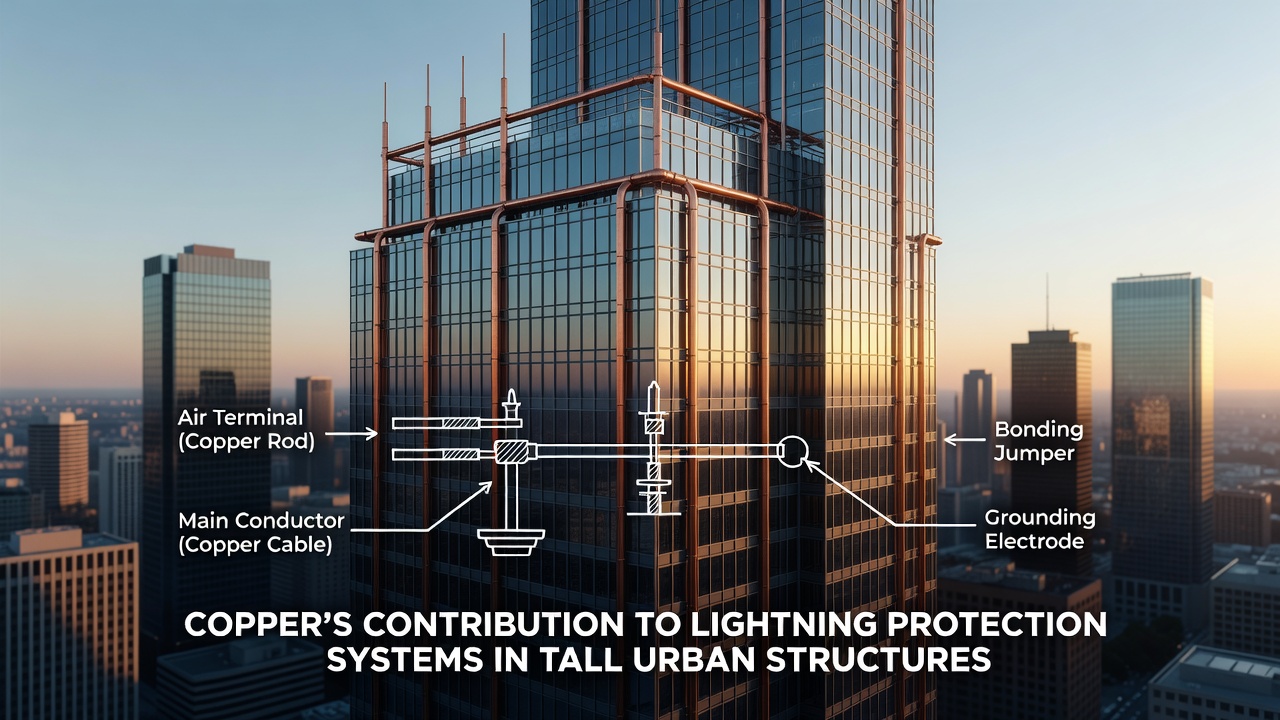
Tall urban structures encounter frequent lightning activity because their height increases the likelihood of strikes, and copper serves as a primary material in the conductors and grounding elements that channel electrical energy safely into the earth. Lightning protection systems combine air terminals, down conductors, and grounding networks, while copper's high conductivity and resistance to corrosion allow these components to handle large current flows without degradation over decades of service. Research from materials science databases shows copper carries electrical current at rates exceeding those of most alternatives, which reduces resistive heating and maintains system integrity during repeated strikes.
Mechanics of Lightning Protection in High-Rise Environments
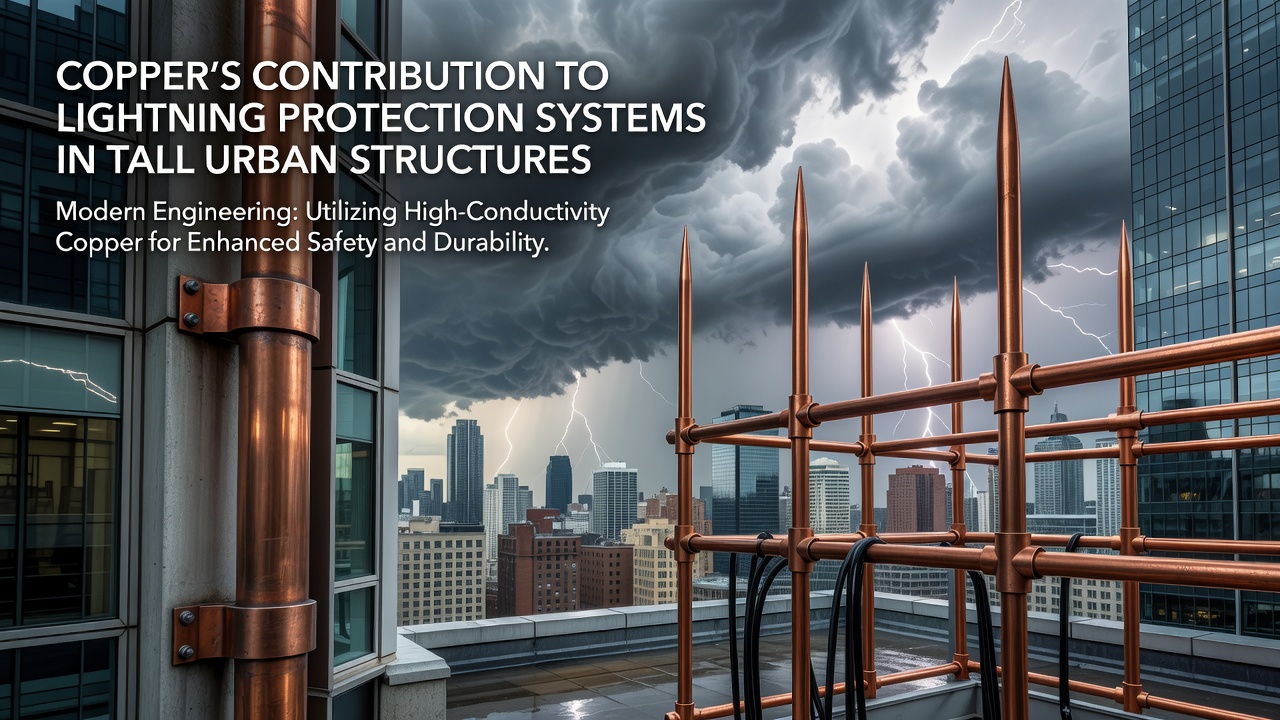
Air terminals positioned at roof edges and parapets intercept lightning, and copper down conductors then route the discharge along the building exterior or through dedicated paths to grounding electrodes embedded in soil or foundation concrete. The National Fire Protection Association publishes guidelines that specify conductor sizing and placement for structures exceeding certain heights, and copper meets these requirements because its cross-sectional area can be smaller than that of lower-conductivity metals while still accommodating peak currents measured in tens of thousands of amperes. Tall buildings in dense city centers also require equipotential bonding between copper elements and other metallic systems to prevent side flashes, a practice documented in engineering handbooks from multiple continents.
Material Properties Driving Copper Selection
Copper exhibits electrical conductivity of approximately 58 megasiemens per meter at standard temperatures, a value that surpasses aluminum and steel by substantial margins, and this property allows thinner conductors to achieve equivalent performance. Corrosion resistance further extends service life in urban atmospheres that contain pollutants and moisture, because copper forms a stable patina that protects underlying metal rather than allowing progressive pitting. Construction records from projects completed in the early 2000s indicate that copper installations in coastal and industrial cities continue to function without replacement, whereas alternative materials required more frequent inspections and repairs.
Implementation Across Global Urban Projects
Engineers incorporate copper down conductors in bundled configurations when architectural constraints limit exposed routing, and these bundles maintain low impedance while fitting within curtain-wall cavities. Grounding grids beneath skyscrapers often combine copper plates and rods driven to depths where soil resistivity drops below target thresholds, and measurements taken during commissioning confirm that such grids achieve resistance values under 10 ohms as required by many building codes. In October 2026, several international engineering forums plan to review updated simulation models that incorporate real-time data from instrumented tall structures, and those models continue to affirm copper's performance advantages under variable strike waveforms.
One documented installation on a 400-meter tower in Asia used continuous copper runs from roof level to foundation, with intermediate bonding points every three floors to equalize potential across structural steel, and post-installation testing recorded current distribution consistent with design predictions. Similar approaches appear in North American and European high-rises, where local standards reference copper conductor specifications published by standards organizations such as the International Electrotechnical Commission.
Integration with Emerging Building Technologies
Modern tall structures incorporate photovoltaic arrays, communication antennas, and energy storage systems, each requiring additional bonding to the main lightning protection network, and copper jumpers provide reliable low-resistance connections between these elements. Data from building management systems reveal that copper-bonded installations experience fewer transient voltage events during storms compared with structures relying on less conductive pathways. Maintenance protocols now include thermal imaging of copper joints because temperature differentials can indicate loosening or corrosion before functional failure occurs.
Standards bodies in Australia and Canada have issued technical bulletins that highlight copper's compatibility with concrete-encased electrodes, noting that copper maintains conductivity even when partially embedded in alkaline environments. These documents also address installation sequencing so that copper conductors avoid mechanical damage during subsequent construction phases.
Conclusion
Copper remains central to lightning protection strategies for tall urban structures because its conductivity, durability, and ease of installation align with the performance demands of high-rise environments across varied climates and regulatory frameworks. Ongoing monitoring of existing installations supplies empirical data that supports continued use, while updated modeling efforts scheduled for late 2026 will refine placement guidelines without altering the fundamental advantages copper provides in current-carrying capacity and long-term reliability.